Wednesday, 7 March 2012

Fair Play And Feminism

With International Women's Day upon us, it's not time to be talking about football, right? Football is played by men and watched by men, I mean how many famous female players can you name? And IWD is all about serious topics like gender violence, and not about fun things like sport.

Not my opinion but I'm sure some people think that way.

In fact at the East Africa Cup in 2010, I got a strong reminder of how sport can influence the way girls and women are viewed and how it can work as a tool to challenge gender stereotypes.

The head of referees at the EAC, who is also the first female Kenyan Premier League referee, was being interviewed on the BBC World Service flagship programme The World Today*.

She talked about how sending men off in local matches was initially scary because of threats of violence, and how people in her community respected her after seeing her successful career. It was during the 2010 World Cup, and she was talking about attitudes to women, domestic violence, and expectations of gender roles to an audience of millions. It was a conversation that was happening because of football.

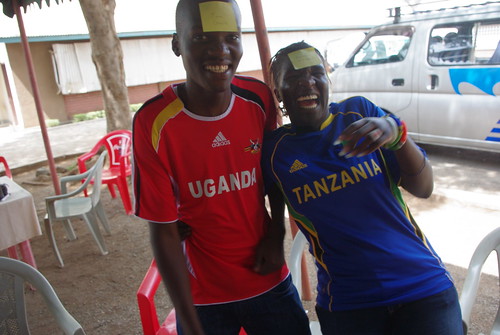
The EAC isn't just about the high profile success stories though: it's a tournament for people using grassroots sport in their community throughout the year. Half of youth participants are girls. They play football at the event, attend workshops, meet people from other countries… importantly they participate visibly in community activity.

Some go on to become referees, community leaders, first aiders or sports medicine practitioners. Others participate in media skills workshops and learn things which can help them in their careers. For others the EAC is a reward for working hard at school throughout the year: putting on a kit and playing in a team will not lead to a job, it's a chance to get fit and be part of a team.

All of which can have an important effect on how women and girls see themselves and how they are perceived in their community.

Listen below to the interview with Maqulate Onyango - head of the referees at the East African Cup.


* the global audience for the World Service is around 180 million

Thursday, 23 February 2012

Help the EAC get its happy ending

For once the Africa Cup of Nations got its Hollywood ending as unfancied Zambia took home the trophy, nearly twenty years after the tragic air crash that wiped out most of its national side.


Central and eastern Africa isn't well known for its football, but in the East Africa Cup it has the biggest youth sports event of its kind in the world, and Zambia has been sending teams since 2010.


It's more than a sports tournament: the biggest prizes don't just go to the best players, but the best all-round competitors. Around half the participants are girls, and there's a sitting volleyball tournament where youngsters with disabilities compete with able-bodied young people.


Finals day at the East Africa Cup


Morning workshops in topics like first aid and HIV and AIDS education are followed by by afternoon games and evening cultural activities. The ethos is not about discovering the next Drogba, it's about giving organisations who use sport in their community throughout the year a chance to shine.


The problem is that all of this costs money: and most of the teams are 'cash poor'. To hire a coach and driver to get to the event, pay for accommodation, passports and vaccinations, provide a nutritious meal for 2,000 youngsters, support year-round workshops, pay the school fees of young players who attend the community sports clubs which make up the participating teams, and train the seminar leaders all costs money.


The event is paid for by a mix of private sponsors, local and international organisations and institutional donors who provide money and services in kind, but there is set to be a funding shortfall this year of around $200k which is set to rise in future years.


The EAC happens annually in Moshi, Tanzania, in the last week of June: but this year there will be a London launch party on Friday March 9, with the aim of ensuring that people who might wish to help sponsor or fund the event, volunteer or tell the world about it can get together and find out more.


There'll be East African food, a very short screening, networking opportunities and the chance to find out more about the event. We hope it will be fun, too. If you are interested in coming along and helping the EAC the happy ending it deserves, please get in touch via email: eastafricacup@mac.com

Wednesday, 7 December 2011

Event of the Year - building on the victory


'It's not just about winning.' 


That's one of the key messages of the East Africa Cup. It's an event mixes football with first aid classes; it's a training event for local coaches, community leaders and journalists.


It's a youth tournament which features sitting volleyball and young people with disabilities are actively involved. It's about cultural exchange and learning, not just winning matches, and for most of the young people involved it's their first trip abroad. Whilst the games can be hard fought, the biggest trophies don't go to the winning teams, but to the best all-round participants.


So when the EAC was nominted in 2010 for Peace and Sport's  'Sports Event of the Year' award, it was great to get the exposure, even if the EAC didn't take home the silverware.


When the EAC was both nominated and victorious this year, it was a great feeling.


(The Peace and Sport organisation was founded in 2007 by Modern Pentathlon Olympic medallist and world champion Joel Bouzou, to 'promote the practice of structured sport and sporting values to educate young generations and help foster social stability, reconciliation and dialogue between communities,' and the nomination got the EAC some useful international publicity).


I was there, having been asked to speak at a plenery session during the event on media and sport. Knowing how hard so many people work towards the event made the victory special - the award was for them, far too many to fit on the stage in Monaco. All over East Africa people were proud of their involvement, and journalists and others got in touch from Kenya, Uganda, Tanzania.


Certainly a great day, but as with any winning team, it's what happens next that matters. How does the EAC moves forward?


The international recognition and exposure resulting from the award is most welcome, of course. But only if it can help towards ensuring a long term stable future for the event. In particular, there's a big funding challenge. At a time when the world economy is fragile, the EAC has a shortfall in funding to ensure it's future.
If you think you can help, get in touch.

Friday, 28 October 2011

EAC & Peace through Sport Takes First Place on the Podium

News from Peace and Sport:
 

 Gustavo Kuerten, IAAF, Club Med Foundation, UN agencies, the East Africa Cup and PeacePlayers International win
Peace and Sport Awards in Monaco
 
Monaco, 27 October 2011 - Peace through sport in action is epitomized by seven outstanding initiatives and people, who have been given awards tonight at the 4th Peace and Sport Awards Ceremony. The winners this year put the spotlight on actors from the sports world who have made peace and social cohesion a reality in 2011.
 
Tonight, H.S.H. Prince Albert II of Monaco and Joel Bouzou, President and Founder of “Peace and Sport L’Organisation pour la Paix par le Sport " have distinguished 7 terrific achievements that embody what sport can do to build bridges between divided communities and promote dialogue.
And for the first time, the organization has chosen to reward an athlete for displaying exceptional commitment.
 
Champion for Peace of the Year Award
-          Gustavo Kuerten
Gustavo Kuerten, world tennis legend and three-time Roland Garros champion was recompensed for his work with the Guga Kuerten Institute (IGK), the non-profit organization he founded. 530 children and adolescents aged 7-15 years and about thirty people with disabilities participate each year in the Guga Kuerten Institute’s sports and educational program called "Champions of Life'.
 
Award for the best peace project from an International Sports Federation
-          The IAAF
The IAAF has developed an educational program for 6-12 year old children offering athletics activities that are fun, attractive, and accessible to all without discrimination. The "Kids'Athletics" program, translated into six languages, uses adapted material, made from local materials, waste products, and natural resources available in the immediate environment.
Award for the Sports Event for Peace of the Year
-          East Africa Cup
The East Africa Cup is a sporting event that brings together young people from 11 to 16 years from eight countries in East Africa and Southern Africa ( Zimbabwe , Zambia , Burundi , Rwanda , Uganda , Tanzania , Kenya and South Sudan ). Through the organization of football, volleyball and wheelchair volleyball tournaments, the East Africa Cup empowers young people in their home communities and educates the public on many topics such as HIV-AIDS and conflict resolution.
 
Prize for the best sports Non-Governmental Organization for peace of the year
-          PeacePlayers International
PeacePlayers International (PPI) uses basketball to bring together and educate young people in divided communities. The methodology uses sport to teach young people to break out of cycles of conflict and isolation and to transmit this knowledge to their community. Since its launch in 2001, PPI has helped over 52,000 young people.
Prize for the best Corporate Social Responsibility (CSR) initiative of the year
-          Club Med Foundation
The Club Med Foundation’s mission is to encourage company employees to carry out volunteer work and transfer their skills by taking part in solidarity actions across the world. The Foundation’ schools are based on a simple concept: giving children from severely disadvantaged areas access to sport through Club Med’s facilities and instructors.
 
Special Jury Prize
-          Score the goals
Teaming Up to Achieve the Millennium Development Goals’ is a 32-page educational comic book featuring 10 football UN Goodwill Ambassadors. The book is primarily aimed at 8-14 year old children and provides a fun interactive way to help them understand, familiarize and reflect about the MDGs.
The Grand Prix for the Peace and Sport Image of the Year was awarded to Skateistan for a photograph taken in the streets of Kabul (Afghanistan) June 21, 2011, during International Go Skateboarding Day. The photo shows young skateboarders - boys and girls - in the Afghan capital celebrating the friendship and solidarity that exists among skateboarders from different countries, ethnic backgrounds, genders and religions. This award was first announced at SPORTELMonaco 2011.
Winners of the Peace and Sport Awards were chosen by a jury of eminent personalities deeply invested in peace-promotion or the consolidation of peace through sport: The 2011 jury was composed of:
 
-              H. E. Nawal EL MOUTAWAKEL, Member of the Executive Board of the International Olympic Committee and Director of the Organizing Committee of the Olympic Games in Rio 2016.
-              H. E. Youssouf FALL, Secretary General of CONFEJES (Conference of Ministers of Youth and Sports of French –speaking States and Governments)
-              Hein VERBRUGGEN, President of SportAccord  
-              Intendant General Lassana PALENFO, President of ACNOA (Association of African National Olympic Committees) and member of the International Olympic Committee
-              Dmitry CHERNYSHENKO, President of the Organizing Committee of Olympic Games and Paralympic Winter Games in Sochi in 2014
-              Marisol CASADO, President of the International Triathlon Union, member of the International Olympic Committee
-              Ralf-René WEINGARTNER, Director of Youth and Sport, Council of Europe
-              Olivier LAOUCHEZ, CEO of Trace TV
 
The Peace and Sport Awards were launched in 2008 and this year were presented in front of an audience of more than 500 prominent figures from politics, sport, the private sector, civil society who are participating in the 5th Peace and Sport International Forum.

Tuesday, 25 October 2011

The Road To Monaco...


The East Africa Cup has been nominated for the 'Sports Event for Peace' award at the  the Peace and Sport International Forum 2011, which starts on Wednesday 26 October in Monaco.


The annual tournament, which takes place in Tanzania each June, combines education, cultural activities, fellowship and sport. 

This is a short edit of the Road To Moshi movie, which was filmed in June 2011 as part of the East Africa Cup's media development programme:  http://www.youtube.com/watch?v=vXqgGZhtvlQ 

It will be premiered at the 2011 forum and features young people from Kenya, Tanzania, Burundi, South Sudan, Rwanda, and Uganda.

An influential community of sporting, political and economic leaders will meet in Monaco tomorrow for the 5th edition of the Peace and Sport International Forum to discuss sport’s contribution to establishing and maintaining peace in sensitive areas of the world.

Placed under the High Patronage of H.S.H. Prince Albert II of Monaco, in a neutral and apolitical environment this unique summit will bring together more than 500 experts and prominent figures from 100 countries.

Notably, there will be more than 50 official government delegations, famous sports champions, major international organizations, 30 Olympic and non-Olympic International Sports Federations, 20-members of the International Olympic Committee, 40 Presidents of National Olympic Committees, private sector companies and numerous field operators (NGOs and associations).

Five Heads of State will also speak: H.S.H. Prince Albert II of Monaco; the King of Lesotho H.R.H. Letsie III; the President of the Republic of Burundi H.E. Pierre Nkurunziza; the President of the Republic of Hungary H.E. Pál Schmitt, and the President of the Republic of Macedonia H.E. Gjorge Ivanov. 

For more on the event, please click here:
http://www.peace-sport.org/awards-2011/nominees-for-the-peace-and-sport-awards-2011.html

If you are interested in getting involved with the East Africa Cup, please email eastafricacup@me.com

Wednesday, 22 June 2011

The Road To Moshi

It's good to finally be in Moshi via a long and interesting journey which took Burundi, Rwanda and Nairobi.


We wanted to document the people who use sports in their community all year round as they make their way to Tanzania for a tournament that brings together the best in sports for development.


We've seen street children who go to school because they were motivated by a sports organisation in a slum - one which has its own professional team and trains photographers and film-makers too.


Filming at the Mathare Youth Sports Association library in Nairobi
We've met a Rwandan team who bring together Hutus, Tutsis and orphaned young people: they come for the football, stay for the English, life skills and computer classes and leave as friends.


We've been to Burundi too - a country where the president used to be a PE teacher and the president makes his staff go for a run every Friday - where Right To Play make sure that young people with disabilities participate equally in sport through sitting volleyball, a sport that's much tougher than it sounds...


Along the way we've been delivering pop up film workshops, and lending cameras to people so they can document their journey to the East Africa Cup. Watch this space for their contributions.


The training programme  is underway now, and matches will start this afternoon - the finals will take place on Saturday 25 June in Moshi Memorial Stadium in the market area of Moshi.


(by Nick Raistrick - this is a multi-authored blog on behalf of the East Africa Cup where I am delivering training as part of a BBC World Service Trust  training project)


MYSA Kenya, helping street  - http://www.mysakenya.org/
CHRISC Rwanda - http://www.chriscrwanda.org/
Right To Play - http://www.righttoplay.com/International/the-team/Pages/Coaches/NzobonankiraBenjamin.aspx

Tuesday, 14 June 2011

Press Release - Destination Moshi


14/06/2010

FOR IMMEDIATE RELEASE

For attention of the News Editor

Destination Moshi 

Dust off your vuvuzelas for a celebration of African culture, fellowship and football at this year's East Africa Cup.

Have you ever been abroad? For many of the 1300 boys and girls from Zambia, Kenya, Tanzania, South Sudan, Zimbabwe, Rwanda and Uganda this is their first time, and it's been a long road to get there.

Not just because of the long journeys by bus (several days for some teams in order to arrive Moshi, Tanzania in the foothills of Mount Kilimanjaro), but because the clubs involved in the East Africa Cup (EAC) must show a year-round commitment to sport in their community: the football drives the passion, but it's used to provide a platform for training in life skills. 

So the under 16 players attend morning workshops in topics like HIV and AIDS prevention, leadership, first aid and conflict resolution before each afternoon's games. For many of the of the young people taking part in the journey involvement in sport and the chance of being involved in the event has helped improve school attendance throughout the year.

In the afternoon there's the famous (and often competitive) under 16 football tournament, and this year there's also sitting volleyball - which gives disabled youngsters the chance to participate in physical activity.

Around half of all players are girls, and the which sends out a strong signal that girls can achieve; indeed a former EAC head of the referees went on to become the first CAAF (Confederation of African Football) commissioner, taking charge of international fixtures.

Whilst there are plenty of high profile success stories - and some EAC players have gone on to become professionals, - this isn't the main goal. The  focus of the event is to highlight the role of youth as real changemakers in their respective  “home” communities: youth leaders involved with the EAC and its participating organisations  set an example in slum neighbourhoods, or be part of the peace-building process in areas affected by violent conflict.

The BBC World Service Trust's involvement means there will be training sessions for East African Journalists covering the event, as well as for youth leaders who want to develop media skills through promoting their organisation's work: there's a strong practical element to this, as the young people host local and international media covering the event, and they will work closely with the film-making group. A new addition for this year is a cartoon workshop! So expect plenty of exclamation marks!!! 

In the evening the cultural teams put on a show. The dancing, singing, and drama from the countries involved creates an atmosphere where young people can make new friends from other countries: for youngsters who have never left their home neighbourhood this is quite an experience. 

For Moshi, there's an real economic benefit: as well as local businesses benefitting, the schools which host the youngsters have been able to pay for new classrooms and repairs through 

This year's East Africa Cup takes place between 20th and 25 June. The finals take place on the afternoon of Saturday 25 June at Moshi Memorial Stadium - come and say hello if you are in the area.

Partners in the EAC are formally Norwegian People’s Aid (NPA), Kristen Idretts kontakt (KRIK), Mathare Youth Sports Association (MYSA), and Christian Sports Contact (CHRISC). Other supporting partners are BBC World Service Trust, Right to Play, Norway Cup, Norges Idrettsforbund, Fredskorpset, Statoil, Ultimate Security, Tanzania Football Federation, Tanzania National Sports Council, and NORAD. 
–Ends-

Contacts

For general media enquiries, please contact: Elly Omondi omoelly@gmail.com

If you want to speak to the BBCWST media team contact: nick.raistrick@bbc.co.uk

If you are interested in volunteering, please contact:
George Kamau george.kamau@mysakenya.org or Bjarte Øen bjarte@krik.no

The East Africa Cup is looking for new sponsors - for more details please contact:
Svein Olsen sveino@npaid.org or Bjarte Øen bjarte@krik.no

Notes to editors
Much more than a sports tournament, the East Africa Cup is a celebration of sports, fellowship, cultural exchange and education. Set against the spectacular, Mount Kilimanjaro in Tanzania, the event features more than 1300 participants from Zambia, Kenya, Tanzania, Rwanda, Zimbabwe, Zambia and Uganda.
Before a ball is kicked the young people attending the event – and their leaders – get involved in a practical, educational programme of workshops. These include first aid, Kicking Aids Out, conflict resolution, leadership skills, and refereeing. The participating clubs must show a year-round commitment to using sports in their communities, and after each afternoon’s football there are cultural activities like dancing, signing and poetry.
The East Africa Cup (EAC) was created formally in 2004. The current core partners are Norwegian People’s Aid (NPA), Kristen Idrettskontakt (KRIK), Mathare Youth Sports Association (MYSA) and Christian Sports Contact (CHRISC).